
The calm, dark and quiet nature of the winter can seem… how do I say this? Oppressive! The combination of the winter season and the stress of the times can leave us feeling weighed down, stagnant, or uninspired.
Here is the BIG Ayurveda tip to counteract this: double down your commitment to yoga.
An invigorating and expansive yoga practice during winter can be surprisingly supportive of your overall well-being. Below are some specific recommendations to practice yoga during winter.
Here are the go-to yoga poses to bring vigor to your life this winter:
Sun Salutation (Surya Namaskar)
Warrior I (Virabhadrasana I)
Warrior II (Virabhadrasana II)
Reverse Warrior (Viparita Virabhadrasana)
Forward bends and bacbends are also recommended, as are postures that stimulate metabolism like:
Cobra (Bhujangasana)
Bow (Dhanurasana)
Side Plank (Vasisthasana)
Supine twists like Revolved Abdomen Variation (Jathara Parivartanasana Variation)
Of course you can adapt your practice on a daily basis to work with your local climate (as you know and your internal needs. For example if you feel stressed and depleted (Vata imbalance), move at a slower and gentler pace. Or if you feel unmotivated and lethargic (Kapha imbalance), move at a faster pace, allowing your breath to quicken and your inner heat to intensify. I know this makes total sense but sometimes you need to read it somewhere.
However you practice, PRACTICE. Practice with an expansive heart and hold your poses long enough to feel challenged.
In addition to your yoga practice, cultivate a supportive winter-season diet and lifestyle. These may look quite different from one person to the next, but each of us has a great deal to gain from honoring and aligning ourselves with the rhythms of nature.


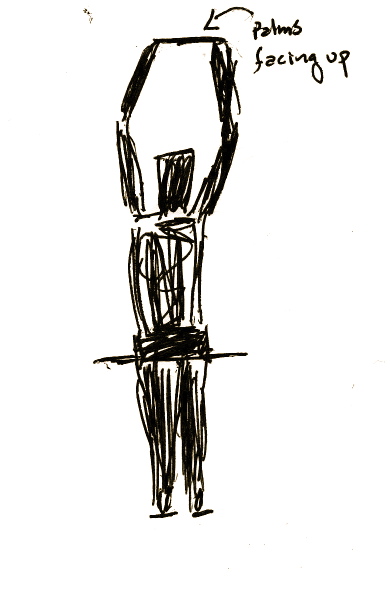 Sit with a straight back, making sure your feet are grounded on the floor-about hip distance distance apart. Clasp your hands, and extend your arms forward. Turn the palms away from you and raise your arms until the palms face the ceiling. As you inhale fill the torso with air from the bottom of the spine to the top of your lungs. Expand the ribcage concentrically as you do so. Pay attention to to your back, we tend to forget to breath in this region. Make sure the shoulders and sides of your neck are moving back. Stretch and feel yourself growing taller as you reduce the stress in your head, neck, and shoulders. This posture lengthens your sides, and it just plain feels good.
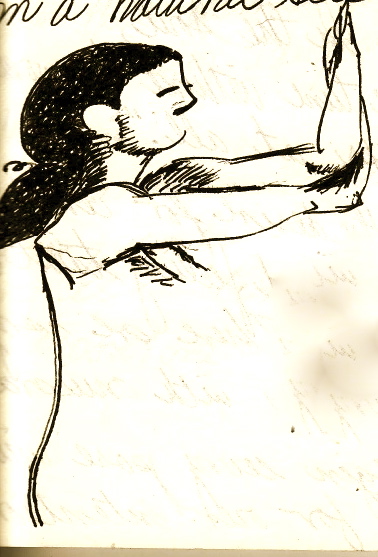 Sit tall and place your arms in front of you at a 90 degree angle. Cross your arms so that the right arm is above the left. Interlock your arms and press your palms together with the tips of your fingers pointed upward. Feel yourself contracting. Surrender to this feeling and begin to breath deeply while relaxing your shoulder blades. This pose strengthens triceps, shoulders, and back muscles. It’s a good preventative measure against carpal tunnel syndrome. If you know the full pose, add your legs by simply cross your legs and interlock them with one foot behind the other. Do the left arm above the right next.
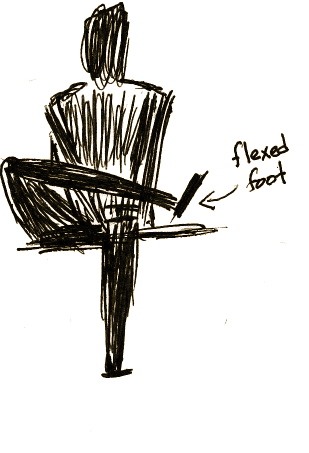 Sit in your chair and cross your right leg over your left knee. Flex both feet- press through the mount of the big toe. If chair allows it, lift the feet off the floor. "Thread the needle" by clasping your hands around your left leg, just under your knee. Stay connected by pressing the ankle against the knee, even if you cannot lift your feet of the floor, this posture stretches hip rotators, outer thighs, and relieves tension in the lower back. Be sure to reverse sides.
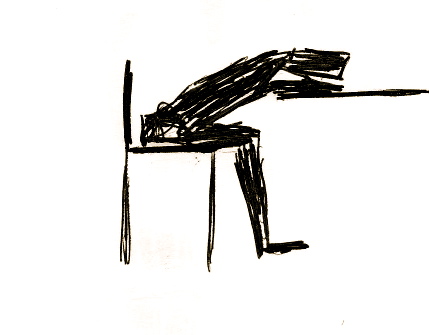 Before returning to work, give yourself a few minutes to relax. This relaxing pose is so simple but very effective in reducing stress in your facial muscles and helping to prevent fatigue. Simply cross your arms and place them on the surface in front of you. Make sure your feet are planted on the floor about hip distance apart. Then rest your head on your crossed arms; just breath and enjoy the yoga-break.
